
ART OSAKA 2026 Reframes Contemporary Art in Japan fromKansai
- Apr 22
- 4 min read
Osaka, Japan | May–June 2026

ART OSAKA 2026 will return this spring with an expanded, two-venue format that positions Osaka—and the Kansai region more broadly—as a key lens through which to view contemporary art in Japan and across Asia. One of Japan’s longest-running contemporary art fairs, founded in 2002, ART OSAKA has developed a distinct identity rooted in Kansai while maintaining close ties to East and Southeast Asia. In 2026, the fair enters a new phase, aligning its structure more clearly with Osaka’s evolving urban and cultural landscape.
ART OSAKA 2026 brings together 60 galleries from 6 countries and regions across 15 cities, reinforcing its position as one of Japan’s leading contemporary art fairs. Participating galleries represent Japan, South Korea, Taiwan, the Philippines, and Hong Kong. Through this dynamic mix of established and emerging galleries, ART OSAKA 2026 highlights the diversity and vitality of contemporary art in Asia and beyond.
Two Venues, Two Perspectives
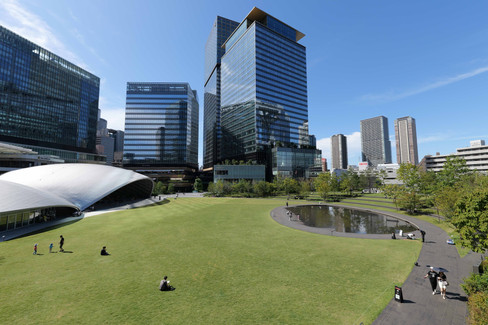
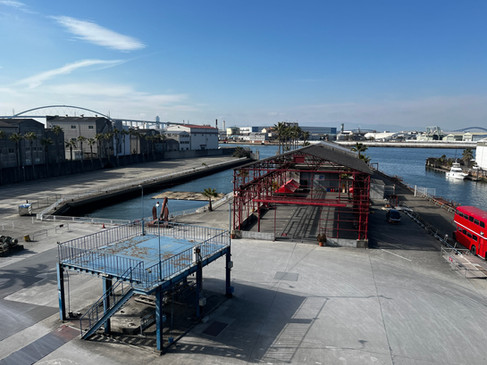
The fair will unfold across two contrasting sites. The Galleries Section takes place from May 29–31, 2026 at Congress Square, Grand Green Osaka, located in the city’s rapidly redeveloping Umekita district. Meanwhile, the Expanded Section runs from May 28–June 1, 2026 at Creative Center Osaka, a former shipyard in Kitakagaya, long associated with large-scale and experimental art projects. Together, the two sections articulate a curatorial approach that moves fluidly between market-oriented presentations and site-responsive exhibition making.
Galleries Section: A Cross-Section of Asian Contemporary Art
The Galleries Section brings together 52 galleries from Japan and across Asia, organized into four formats: Galleries, Focus, Wall, and Screening. This structure allows historically significant figures, mid-career artists, and emerging voices to coexist on a single floor, offering a cross-sectional view of contemporary practice in Japan and East Asia.


Participating galleries include leading spaces from Tokyo and Kansai, alongside international galleries from South Korea, the Philippines, and Taiwan. Among them are Galerie Stephanie, Gallery Shilla, Gallery Chosun and Woong Gallery, reinforcing ART OSAKA’s role as a regional platform within Asia.
Within the Focus section, Gallery Nomart, known for its experimental ethos and for supporting the early career of Kohei Nawa, presents a solo exhibition by Kana Ueda (b. 1988), a recipient of the Sakuya Konohana Award, a long-established prize organized by the City of Osaka.
Also in Focus, Unfold Gallery, directed by a Taiwanese-born curator and gallerist, stages a two-person presentation by Wei-Ni Lu and Yuki Miyake, bridging Taiwanese and Japanese contemporary practices.
The Screening format builds on ART OSAKA’s 2025 historical program Exploring Artistic Expression in Moving Image Works from the 1960s to Today in Japan, foregrounding three artists working with moving images: Shuhei Nishiyama(b. 1976), Bo Na Park (b. 1977), and Nobuyuki Osaki(b. 1975).
Expanded Section: Installation, Scale, and Experience
The Expanded Section brings together 13 projects by 15 artists (including two duo units), spanning generations from those born in 1961 to 2001. Working with large-scale installations, video, and immersive environments, the artists engage directly with the industrial architecture of the former shipyard.



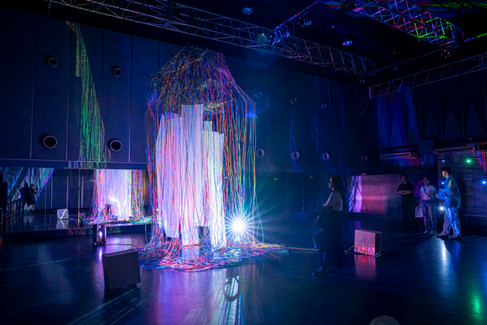
Highlights include a neon-based spatial installation by the artist duo antitail(Takashi Kunitani and Tomoko Hashimoto, +1art) , an interactive projection-based work by Goki Muramoto (b. 1999, MUG), and video installations by Keito Mitoma. On the upper floors, Takeshi Nishimoto presents a 30-metre-long site-specific installation responding to the scale and memory of the shipyard space. International perspectives intersect with local practices through works such as ceramic installations by Taiwanese artist Lai Ko-Wei (Der-Horng Art Gallery), reflecting broader currents in Asian contemporary art.
A special collaborative project with Fukugan Gallery traces the evolution of Kansai’s underground culture through exhibitions and live performances, highlighting how street-based practices in music, fashion, and performance have expanded the boundaries of contemporary art in Osaka.
Responding to this broader institutional momentum, Another 1990s proposes an alternative historical narrative. The exhibition centers on works created during the 1990s by artists based in the region whose practices, while deeply rooted in Japanese sensibilities, have not always been fully integrated into the dominant narratives shaped by national survey exhibitions. The decade, marked by the aftermath of Japan’s economic bubble collapse and social upheavals including the Great Hanshin-Awaji Earthquake (1995), fostered a generation that sustained rigorous experimentation amid prolonged uncertainty. Featuring works by Mima Akasaki(b.1965-), Yasue Kodama(b.1961-), Shiro Matsui(b.1960-), Yoshinobu Nakagawa(b.1964-), Chieko Oshie(b.1969-), Katsuo Tachi(b.1964-2009), and Etsuko Tajima(1959-), the exhibition reexamines practices shaped by Kansai’s specific social and cultural environment and continuously developed into the present. By reconsidering postwar Japanese art history from a Kansai vantage point, Another 1990s illuminates a parallel and enduring lineage of artistic inquiry—one that remains active and vital, yet comparatively underrepresented within institutional narratives to date.
Beyond the Fair: Osaka as a Citywide Context
ART OSAKA 2026 coincides with major museum exhibitions across the city, including presentations at the National Museum of Art, Osaka, and the Osaka Nakanoshima Museum of Art, offering historical depth and institutional context. Artist-led spaces in Kitakagaya, including Super Studio Kitakagaya and M@M, the private museum founded by Yasumasa Morimura, further situate the fair within Osaka’s living artistic ecosystem.
Seen together, ART OSAKA 2026 positions the city as a gateway for experiencing contemporary art in Japan and Asia today—linking market, experimentation, history, and urban context within a single visit.


