minä perhonen’s Timeless Designs
Updated: Dec 28, 2025
“Imagination takes shape and breathes life into daily living.”
—minä perhonen

Textile design in Japan has come a long way—from basic weaving using plant fibers in the Jomon period to silk-making in the Yayoi era, and to more sophisticated sewing techniques like Nishijin-ori from Kyoto, ikat, sashiko, katazome dyeing, and the development of kimono styles.
Thirty years ago, the brand minä perhonen was initiated based on designer Akira Minagawa's vision of a look that “will last at least a hundred years.” His dream may have transcended just a bit less than halfway through, but the label will surely continue to perpetuate in the next generations.
Setagaya Art Museum is showcasing “TSUGU minä perhonen” until February 1st, 2026. The term “tsugu” signifies “to inherit,” “to connect,” “to follow,” or “to tell.” It embodies the image of water ripples that flow constantly in the same way minä perhonen associates relentlessly with ordinary people, artisans, eras, and generations who share a common passion for creativity and new technology evolving into the future.
“minä” comes from the Finnish word for “I,” and “perhonen” means “butterfly.” Minagawa traveled around Scandinavia and adopted the Finnish words to express creations that emulate the individual “I” or “himself/herself.” He perceived beautiful designs that raise self-consciousness and expansiveness by flying like butterflies, and spreading bliss and aspiration. He first created a mini bag made from surplus materials in 1996. In 1999, the brand’s first chair, the “giraffe chair,” upholstered with simple and decorative textile patterns, was launched. Thereon, product development surged endlessly with high-powered ideas.
The grand exhibition reveals the original artworks of the brand’s numerous textile patterns, matched with everyday garments and accessories. As of this date, over a thousand textile designs have been woven into clothing and interiors—many of which are presented in detail. Works by other craftsmen who support minä perhonen’s expressions are also on view. Visitors can understand the weaving and pattern-making process. Video clips and a huge panel screen demonstrate the textile printing method.
The opening gallery, named “chorus,” boasts approximately 180 textiles featuring the brand’s signature motifs: “hoshi*hana (star-flower),” “forest parade,” “glass flower,” “pot-au-feu,” and more that imbue mixed design inspirations. They resonate like music sheets in an orchestra.

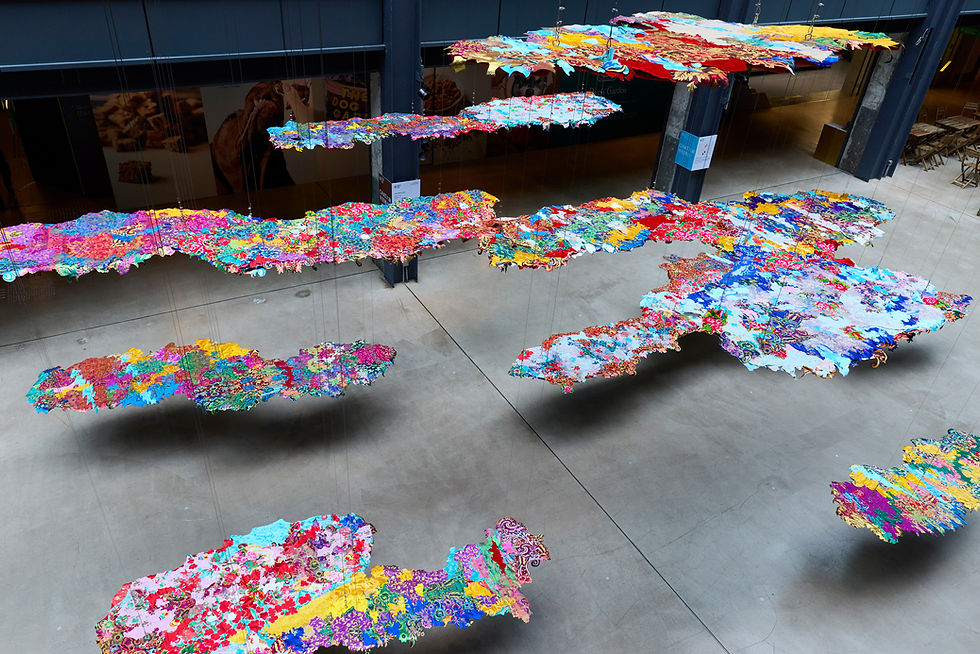
In the next large main hall titled “score,” minä perhonen’s twenty-one patterns portray each of their distinct themes and stories, and the transition from one motif to another. Some are suspended from the ceiling, while others lay across long tables combined with multifarious products. They manifest the label’s usage diversity and adaptability to daily living.
“surplus” is one of the brand’s famous patterns. Its original artwork reconstructed scraps of paper to form “accidental” shapes. Overlapping pink, brown, beige, blue, yellow, and green cut-out designs assemble like actors on a stage to entertain the audience. The meticulous pattern used seven layers of printing screens. As exhibited, it has been adapted onto dresses, tumblers, pencil cases, and other products.

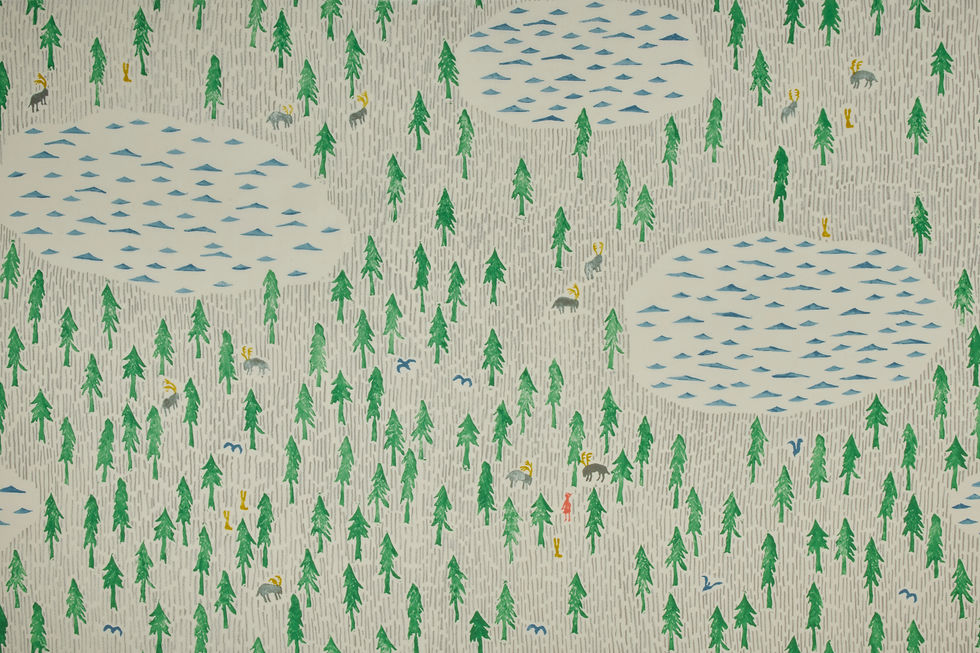
The lovely forest ensemble in the “one day” design features pine trees, animals, and waves on a lake created by eraser stamps. Acrylic gouache was applied to the handmade stamps and blended with other colors to produce an uneven textured finish.
Rows of ovals resemble tiny, glittering grains or pastries in the “tarte” pattern. The fabric is lined with three-dimensional grain embroidery and decorated with fine stitching. The recurring sequence of pink, brown, and gray eggshapes with alternating colored outlines is most appealing, especially for cushions or a tablecloths.
Other attractive designs include “oasis,” a waterfront collage of curious white horses merged with blue polka dots; “sea sky,” also in blue and white, depicting wave-like forms splashed with brush strokes; the popular“tambourine,” stitched with freehand drawn minuscule grain-like beads that form repeated rings; and the iconic “triathlon” pattern.
“triathlon” captures playful sprays of water shimmering against the light reflected on the background. It was CEO Keiko Tanaka’s first creation for minä perhonen in 2003. She painted and cut the original sheets, then printed them on a light linen fabric, effectively emitting wonderful seascape contrasts. Her aim was to depict a triathlon not as a competition but as a “journey toward a goal with joy.”
minä perhonen is recognized not only for its heartwarming designs but also for its innovative weaving and printing technology. Two rooms present the tools and machinery, such as spools of thread, a sewing machine, and pails of paint dyes used in producing the textiles. Visitors can witness the extremely challenging tasks involved in delineating the unique line variations and dynamic changes in hand-drawn patterns through machine embroidery, which serves as the foundation of the brand’s identity. The videos also expound on the strict quality control inspection—assessment of the machine threading tension, line adjustments, color layering, bleeding and pooling of the pigments, the precise mixture and consistency of the dyes, and any errors.
A replica of the atelier is also set up to give viewers a more in-depth and realistic feel for the production’s behind-the-scenes. The desks of Minagawa and Tanaka are shown facing the windows, peeking through a vast park.
The second floor introduces minä perhonen’s collaborators and close associates, such as Toshihiro Sato, a craftsman at an embroidery factory, and Miyako Watanabe, the wife of the current chairman of a long-established teahouse, and others, through their products and video interviews. The brand has also teamed up with an impressive range of international companies and artists, namely Kvadrat (Denmark), Nathalie Lété (France), Ingegerd Råman (Sweden), Artek, Iittala, and many more.
A special corner is devoted to wardrobes purchased by customers that have been redone or repaired upon request. Exhaustive explanations describe the underlying concepts behind each piece and the guidelines for the remake method as proof of minä perhonen’s generous consideration of and attention to user satisfaction.
minä perhonen remarked, “Our diverse designs create a chain of ‘passing on’ (tsugu), spreading like ripples and becoming a hopeful cycle for society.” (“TSUGU minä perhonen,” Setagaya Art Museum)

Written by Alma Reyes
Details
_
“TSUGU minä perhonen”
Setagaya Art Museum
Until February 1, 2026
10:00-18:00 (Closed Mondays or the following day if Monday falls on a holiday and December29-January3)