Beyond Borders: Nobel Laureates Renew Their Commitment to Peace at Lindau
Photo & Text By Olivia Matsumoto
From 28 June to 3 July 2026, the 75th Lindau Nobel Laureate Meeting brought together more than 70 Nobel Laureates and approximately 600 young scientists from around 100 countries and regions in Lindau, Germany. Under this year's theme, Science Transcending Borders, participants explored not only scientific advances but also the responsibilities that accompany them in an increasingly interconnected world.
The Opening Ceremony was led by Countess Bettina Bernadotte, President of the Council for the Lindau Nobel Laureate Meetings, with representatives of the German Federal Government and the international scientific community also in attendance.

Although the Lindau Meetings are best known for fostering scientific dialogue across generations, one forum highlighted a broader question: what responsibilities do scientists bear in an era of growing geopolitical instability?
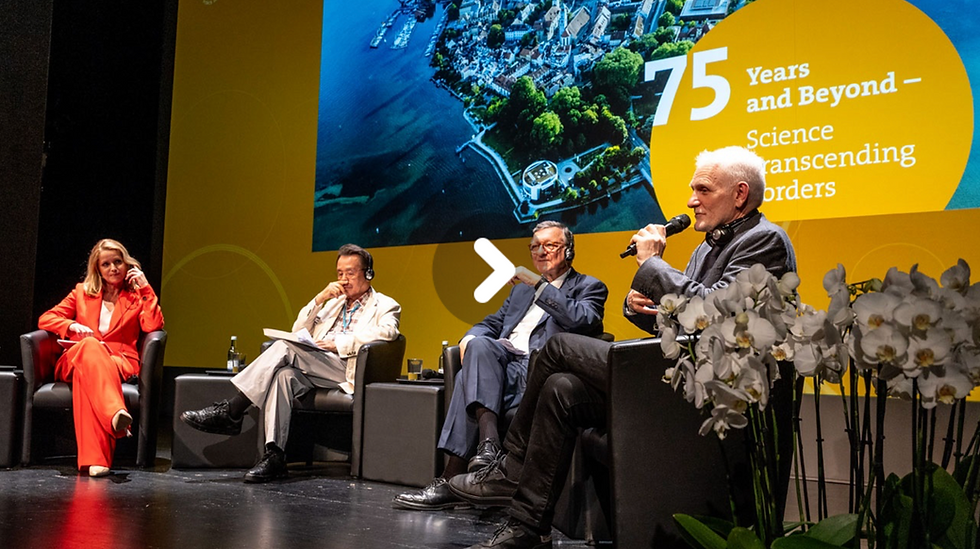
On 30 June, the forum, Follow-up on the Mainau Declaration 2024: The Threat of Nuclear War, brought Nobel Laureates and young researchers together to examine nuclear risk, artificial intelligence, international security, and the role of scientists in safeguarding humanity's future.
For GEN DE ART, the discussion also continued the magazine's longstanding editorial coverage of peace-related issues within the Nobel community. In December 2024, the magazine reported from Oslo during the Nobel Peace Prize events, where Nihon Hidankyo (Japan Confederation of A- and H-Bomb Sufferers Organizations) received the 2024 Nobel Peace Prize. Eighteen months later, the discussions in Lindau demonstrated that peace, nuclear weapons, and global responsibility remain central concerns within the international scientific community.
From the 1955 Mainau Declaration to the Present

The forum opened with a reflection on the origins of the Mainau Declaration.
In 1955, at the dawn of the nuclear age, 18 Nobel Laureates, including Otto Hahn, Werner Heisenberg, and Max Born, issued the declaration on Mainau Island, urging nations to resolve conflicts peacefully and warning of the catastrophic consequences of nuclear war.
Nearly 70 years later, amid renewed geopolitical tensions, Nobel Laureates released an updated Mainau Declaration in 2024, reaffirming the need to reduce nuclear risks, strengthen international dialogue, and promote the responsible use of science and technology. The 2026 discussion at Lindau underscored the continuity of that commitment.
David J. Gross, recipient of the 2004 Nobel Prize in Physics, reviewed the evolution of international nuclear arms control since the Cold War. Although international treaties had substantially reduced global nuclear arsenals, he warned that recent geopolitical developments had once again heightened uncertainty. Gross emphasised that scientists, particularly younger generations, should understand not only scientific research itself but also its broader implications for society and global security.

Scientific Progress and Human Responsibility
William E. Moerner, recipient of the 2014 Nobel Prize in Chemistry, introduced discussions emerging from the 2025 Nobel Laureate Assembly for the Prevention of Nuclear War, held in Chicago.
Among its principal recommendations was the concept of Meaningful Human Control. As artificial intelligence becomes increasingly integrated into military and security systems, Moerner argued that decisions involving nuclear weapons must remain under meaningful human authority. While artificial intelligence may enhance operational efficiency, it cannot replace human judgement, ethical responsibility, or accountability.
Brian P. Schmidt, recipient of the 2011 Nobel Prize in Physics, turned the discussion towards the approximately 600 young scientists attending the Meeting. Rather than proposing definitive solutions, he invited participants to consider a practical question: how can today's generation contribute to reducing the risk of nuclear war?
Throughout the week, young researchers from diverse disciplines and countries were encouraged to develop and share their ideas. Schmidt stressed that while Nobel Laureates can offer experience and historical perspective, lasting solutions must also come from younger generations whose perspectives are shaped by a rapidly changing geopolitical and technological landscape.
Rae McGrath: Peace Begins with Understanding
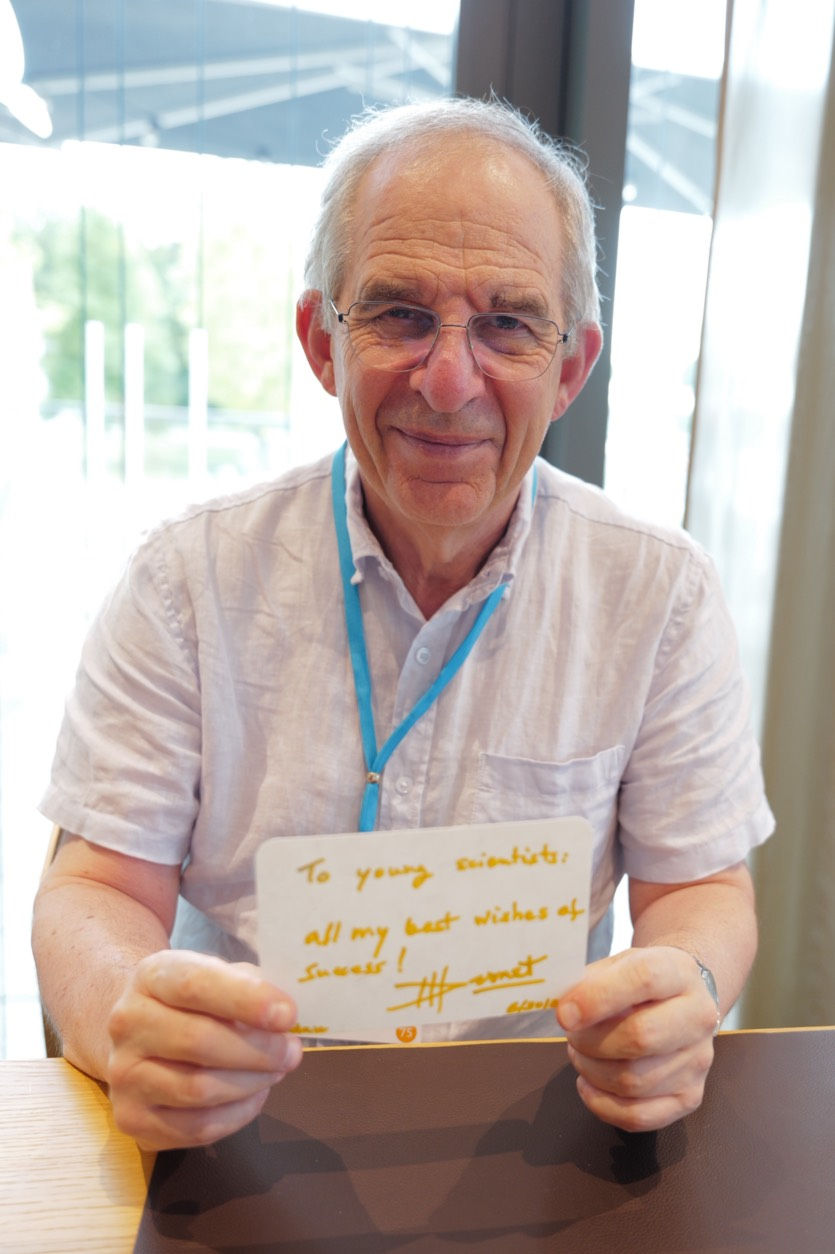
Following the forum, GEN DE ART interviewed Rae McGrath, British humanitarian campaigner and co-founder of the International Campaign to Ban Landmines (ICBL), which shared the 1997 Nobel Peace Prize.
Reflecting on the discussion, McGrath argued that meaningful action begins not with advocacy but with understanding. Young people, he suggested, should first develop a thorough understanding of war, nuclear weapons, humanitarian law, and international security before seeking to influence public debate. Constructive dialogue, he said, is most effective when grounded in knowledge rather than slogans.
McGrath also posed a fundamental question: if governments consistently speak of peace, why does the global production and export of weapons continue to expand? For younger generations, he suggested, asking informed questions may be just as important as advocating particular answers.
A Continuing Conversation
The Nobel Peace Prize and the Lindau Nobel Laureate Meeting serve different purposes. One recognises outstanding contributions to peace; the other promotes scientific exchange across generations. Yet both continue to address questions that extend well beyond their respective fields.
In Oslo, the survivors represented by Nihon Hidankyo reminded the world of the human consequences of nuclear weapons through lived experience. In Lindau, Nobel Laureates considered how scientific progress, emerging technologies, and international cooperation will shape the future of global security.
Together, these conversations illustrate that peace is not solely a diplomatic or political challenge. It is equally bound to scientific responsibility, technological development, and the choices made by future generations.
As the Lindau Nobel Laureate Meeting marked its 75th anniversary, one conclusion emerged clearly: scientific progress alone cannot secure humanity's future unless it remains guided by human responsibility.